As Amazon Associates, we earn from qualifying purchases. This means we may receive a small commission at no extra cost to you if you click through and make a purchase.
Crucial has established itself as one of the most dependable consumer storage manufacturers in personal computing, largely because of its direct lineage to Micron, one of the world’s leading semiconductor fabricators. This unique foundation allows Crucial solid state drive reliability to remain remarkably consistent across production runs, as the brand manufactures its own 3D NAND flash memory and maintains tight quality control over firmware engineering. For users seeking an upgrade around the crucial 512gb ssd storage threshold, Crucial delivers options built for long-term daily stability, thermal efficiency, and broad hardware compatibility across both legacy PCs and modern gaming systems.
While all solid-state drives replace mechanical platters to deliver silent operation and faster boot times, this crucial ssd comparison demonstrates that these six models differ sharply in physical form factors, interface throughput limits, and targeted computing roles.
Crucial SSDs Compared
| Drive Model | Form Factor | Interface | Max Read Speed | Warranty |
|---|---|---|---|---|
| Crucial BX500 500 GB Solid State | 2.5-inch | SATA 6.0 Gb/s | 550 MB/s | 3-year limited warranty |
| Crucial E100 SSD 480GB M.2 NVMe | M.2 (22mm) | PCIe Gen4 x4 NVMe | 4,700 MB/s | 3-year limited warranty |
| Crucial P310 500GB SSD | M.2 2280 | PCIe Gen4 x4 NVMe | 6,600 MB/s | Not listed |
| Crucial BX500 1TB 3D NAND SATA | 2.5-inch | SATA 6.0 Gb/s | 540 MB/s | 3-year limited warranty |
| Crucial BX500 240GB 3D NAND SATA | 2.5-inch | SATA 6.0 Gb/s | 540 MB/s | 3-year limited warranty |
| Crucial MX500 500GB 3D NAND SATA | 2.5-inch | SATA 6.0 Gb/s | 560 MB/s | Not listed |
Crucial BX500 500 GB Solid State for Budget SATA Upgrades

Best for: Everyday SATA desktop and laptop upgrades
Pros
- Up to 550 MB/s read speed
- Includes cloning software instructions
- Energy efficient design
Cons
- Restricted to SATA 600 bandwidth
- Lower sustained write speed
The Crucial BX500 500 GB Solid State serves as an accessible replacement for slow, mechanical hard drives inside older laptops and desktop towers. Designed around a standard 2.5-inch enclosure with a Serial ATA-600 interface, this drive achieves sequential read speeds up to 550 MB/s and media write speeds up to 500 MB/s. By utilizing non-volatile flash memory and an energy-efficient controller design, it provides snappy responsiveness for regular computing tasks while drawing far less operating power than spinning platters.
From an installation perspective, the crucial bx500 500gb is tailored for straightforward system migration. Crucial supplies downloadable cloning software, clear instructions, and video walkthroughs to help users transfer their operating systems without data corruption. The hardware is backed by thousands of validation hours, qualification testing, and a 3-year limited warranty supported by Crucial technical forums, knowledge bases, and live support specialists.
As a crucial 500gb internal ssd running on the legacy SATA bus, this model is inherently constrained to SATA transfer rates. While it delivers excellent burst speeds for everyday web browsing and office productivity, extended write sessions will see speed reductions once temporary cache reserves are exhausted. Users who manage sustained professional video editing or multi-gigabyte continuous writes will find superior sustained transfer consistency by stepping up to Crucial NVMe drives or the MX-tier series.
Crucial E100 SSD 480GB M.2 NVMe for Entry Gen4 Performance

Best for: Entry-level Gen4 NVMe system builders
Pros
- PCIe Gen4 speeds to 4700 MB/s
- Low heat and quiet operation
- Backward compatible with older slots
Cons
- Conflicting capacity figures in listing
- Lower write ceiling than P310
The Crucial E100 SSD 480GB M.2 NVMe offers an entry point into modern PCIe Gen4 solid-state performance. Built in a slender 22mm M.2 form factor with a PCIe x4 bus connection, this drive is rated for sequential read speeds up to 4,700 MB/s, with listing descriptions noting peak burst potential up to 5,000 MB/s alongside a 2,500 MB/s media speed. Crucial emphasizes that this level of Gen4 throughput delivers speeds up to 8 times faster than SATA drives and up to 33 times faster than traditional mechanical disks.
Acoustic and thermal management are notable strengths of the crucial e100 480gb nvme architecture. The solid-state layout operates completely silently while generating less heat and drawing less power than older mechanical storage devices. The drive is fully backward compatible with older PCIe generations, meaning it can function inside PCIe Gen3 M.2 motherboard slots at the bandwidth ceiling of the older standard. Crucial includes step-by-step setup guides, cloning utilities, and a 3-year limited warranty backed by factory quality control.
Prospective buyers should note that the technical specifications on the listing display conflicting information, citing 128 GB in certain technical specification fields despite the headline 480GB designation and 2TB platform range. Furthermore, the listing mentions a 7200 rpm rotational rating, which is an erroneous catalog detail left over from mechanical hard drive templates. For general desktop builds and mainstream gaming laptops, this drive provides a massive leap over SATA, but it yields to the faster P310 when maximum sustained throughput is required.
Crucial P310 500GB SSD for Handheld Gaming and Maximum Throughput

Best for: Handheld consoles and high-speed gaming
Pros
- Blazing 6600 MB/s read speeds
- Micron G8 NAND flash technology
- Includes Acronis recovery software
Cons
- Requires M.2 NVMe motherboard slot
- Generates heat under heavy load
The Crucial P310 500GB SSD represents Crucial’s high-speed tier for compact computing and gaming systems. Built on an M.2 2280 form factor running across a PCIe Gen4 NVMe interface, the drive hits sequential read speeds up to 6,600 MB/s and write speeds up to 5,000 MB/s, with a listed media speed of 3,500 MB/s. Crucial constructs this model with advanced Micron G8 NAND flash and engineered thermal management to keep performance stable during heavy read-write operations.
Hardware versatility is a key selling point for the crucial p310 500gb, as it is explicitly validated for desktops, laptops, workstations, and compact handheld gaming consoles including the ROG Ally X, Lenovo Legion Go, and AYANEO Kun. It delivers roughly double the productivity performance of older Gen3 drives, significantly cutting down loading screens in AAA gaming titles and accelerating asset handling in creative applications. To protect against data loss during migration, the drive includes Acronis Data Recovery Software for straightforward drive cloning and reliable system backups.
While the P310 functions in older PCIe Gen3 slots thanks to backward compatibility, operating at 6,600 MB/s on Gen4 motherboards produces concentrated thermal energy. When installed in compact handheld consoles or thin notebook chassis, proper internal airflow or a thermal pad is vital to prevent thermal throttling during massive game downloads. For users who only need routine office computing, the P310 provides far more bandwidth than necessary, making the SATA BX500 or entry E100 more practical alternatives.
Crucial BX500 1TB 3D NAND SATA for High-Capacity Legacy Storage
Best for: Bulk SATA secondary file storage
Pros
- Generous 1TB storage space
- 45x more efficient than HDDs
- Micron 3D NAND architecture
Cons
- Capped at 540 MB/s read
- DRAM-less write buffer drops
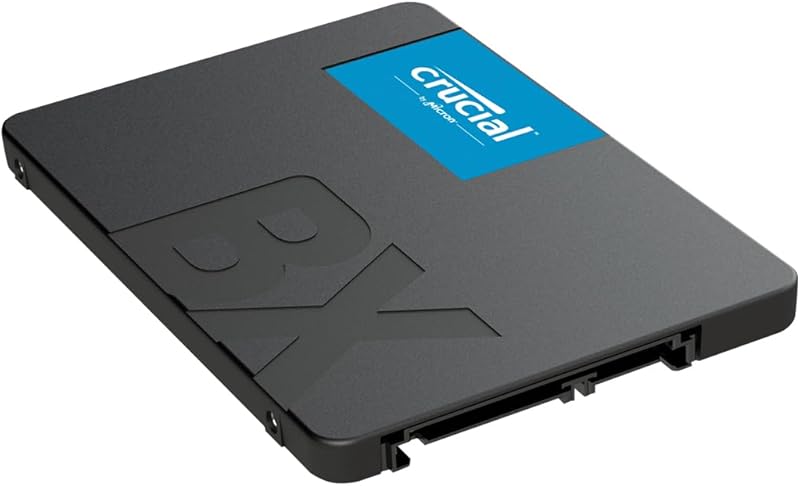
The Crucial BX500 1TB 3D NAND SATA provides substantial storage capacity for systems restricted to standard 2.5-inch 7mm drive bays. With sequential read speeds reaching up to 540 MB/s and media write speeds of 500 MB/s over a SATA 6.0 Gb/s connection, this drive runs roughly 300 percent faster than a mechanical hard drive while operating up to 45 times more energy-efficiently. The technical data notes an installed cache memory size of 256, which helps manage data queues during typical desktop tasks.
Crucial equips this drive with Micron 3D NAND flash, drawing on four decades of memory development to ensure dependable data retention for business, personal, and gaming use. Users outfitting larger secondary workstations alongside high-capacity laptops or exploring high-density storage such as a crucial 2tb ssd will appreciate the balance of physical SATA simplicity and expansive capacity found in this 1TB drive. The unit includes Crucial’s 3-year limited warranty and lists data recovery service support for added security.
The primary constraint of this 1TB drive is its entry-level controller behavior under continuous write saturation. Because the BX500 lineup is designed for everyday consumer responsiveness rather than heavy workstation duties, sustained multi-gigabyte sequential writes will experience performance drops once the write buffer is filled. It excels as a spacious game archive or secondary document drive, but demanding system builders should choose the MX500 for heavy daily sustained workloads.
Crucial BX500 240GB 3D NAND SATA for Essential Boot Drive Refurbishment
Best for: Reviving older budget laptops
Pros
- Energy saving 2.5-inch form factor
- Up to 540 MB/s read speed
- Three-year limited warranty
Cons
- Restricted 240GB storage ceiling
- Legacy SATA interface limit
The Crucial BX500 240GB 3D NAND SATA is built as a targeted, low-capacity drive to revive aging systems without physical hardware alterations. Operating through a standard SATA 6.0 Gb/s interface, this 2.5-inch internal solid-state drive achieves read speeds up to 540 MB/s and media write speeds of 500 MB/s. It replaces noisy, slow mechanical disks to deliver instantaneous system boot times, rapid application launches, and quiet operation.
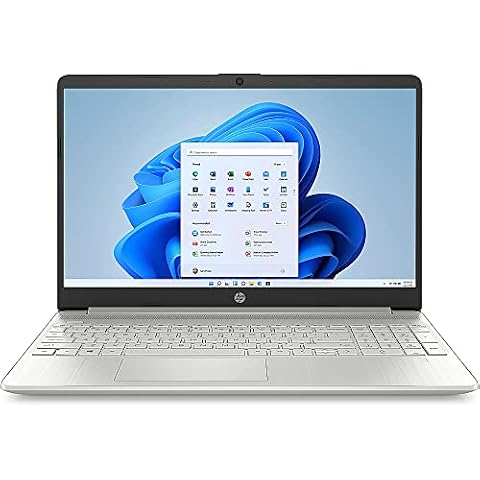
Built with energy-efficient Micron 3D NAND, this 240GB drive is 45 times more power-efficient than conventional hard drives, making it an effective option for extending the battery runtime of older portable computers. System builders refurbishing basic family machines or pairing secondary drives with setups like hp 16gb 512gb configurations will appreciate the simple 7mm SATA form factor. Crucial provides a 3-year limited warranty along with listed data recovery service support.
Nevertheless, a 240GB capacity ceiling presents significant practical limitations in modern computing. After accounting for the operating system footprint, software installations, and security cache files, usable space fills up rapidly. Maintaining empty storage space is essential for solid-state wear-leveling algorithms to distribute write cycles evenly. Users handling media files or modern games should bypass the 240GB model in favor of the 500GB or 1TB variants to guarantee long-term drive health.
Crucial MX500 500GB 3D NAND SATA for Heavy Sustained Computing
Best for: Demanding SATA workloads and boot drives
Pros
- Solid 560 MB/s read speeds
- Hardware cache memory installed
- Listed data recovery service
Cons
- Bounded by SATA 6 Gb/s ceiling
- Warranty duration not specified
The Crucial MX500 500GB 3D NAND SATA is Crucial’s premier 2.5-inch internal SATA drive, engineered specifically for users who need superior sustained performance and heavy write endurance. Connecting over a SATA 6 Gb/s interface, the crucial mx500 500gb achieves sequential read speeds of 560 MB/s and write speeds of 510 MB/s. Unlike basic entry-level models, this unit features an installed cache memory size of 256, allowing the drive controller to maintain fast translation lookup tables during uninterrupted data writing.
Reliability and security are primary pillars of the MX500 series. The drive provides hardware-based data protection and lists integrated data recovery service support to assist with data integrity. Crucial provides a detailed step-by-step guide to simplify drive cloning and system installation. While enterprise servers or high-end creative rigs might eventually require massive platforms like a crucial 4 tb ssd, this 500GB drive delivers the ultimate balance of SATA stability and dependable day-to-day operation.
The trade-offs of the MX500 stem from its legacy interface. Even with its premium controller and dedicated cache memory, throughput is strictly limited by the 6.0 Gb/s SATA bus, running far slower than modern M.2 NVMe drives like the Crucial P310. Furthermore, the listing does not specify the exact warranty duration in years, mentioning only that it is backed by service and support. Still, for machines limited to SATA drive bays, the MX500 is Crucial’s most reliable and resilient internal option.
How to Choose the Right Crucial SSD
When deciding which crucial ssd to buy, the initial factor to verify is motherboard physical compatibility and interface connectivity. Standard 2.5-inch SATA drives, such as the Crucial BX500 and MX500, connect via traditional SATA data and power cables, making them universally compatible with desktop chassis and older laptop bays. Conversely, M.2 drives like the Crucial P310 and E100 require an M.2 expansion slot directly on the motherboard. Confirming whether your system accepts 2.5-inch 7mm drives or M.2 cards prevents hardware mounting mismatches.
The operational divide in crucial sata vs nvme ssd architecture dictates real-world performance ceilings. The SATA 6.0 Gb/s bus caps sequential read rates around 550 to 560 MB/s, which represents the upper limit for the MX500 and BX500. By contrast, PCIe Gen4 NVMe technology connects directly to high-speed PCIe lanes, allowing the Crucial P310 to hit 6,600 MB/s and the Crucial E100 to reach 4,700 MB/s. If your daily workflow involves large video files, creative asset rendering, or modern gaming, an NVMe drive offers significant bandwidth advantages over SATA.
Memory controller architecture and cache provisioning are crucial for sustained write reliability. The Crucial MX500 includes dedicated cache memory, enabling it to handle sustained heavy writes without the sudden drop-offs common in entry-level solid-state drives. The Crucial BX500 series uses dynamic caching, which is energy-efficient and affordable for basic personal computing, but less suited for sustained multi-gigabyte transfers. The Crucial P310 bridges this gap with advanced Micron G8 NAND and thermal management, maintaining high Gen4 throughput across demanding gaming sessions.
Storage capacity and long-term write endurance must also guide your purchase. While a 240GB drive is sufficient for basic operating system refurbishment, higher capacities like 500GB or 1TB provide the extra free space required for healthy wear-leveling. Crucial supports the BX500 and E100 series with 3-year limited warranties and provides cloning software tools across multiple models to ensure safe data migration and reliable long-term service.
FAQ
Which Crucial SSD is best for an older laptop?
For older laptops equipped with standard 2.5-inch drive bays, the Crucial MX500 500GB or Crucial BX500 500GB are the best choices. Both models utilize a 7mm 2.5-inch SATA design that drops into standard bays while consuming up to 45 times less energy than mechanical disks. If your laptop handles frequent multitasking, the MX500 is preferable because its installed cache memory sustains performance under continuous operation.
What is the performance difference in Crucial SATA vs NVMe SSD models?
The difference centers on data bus bandwidth. Crucial SATA drives like the BX500 and MX500 reach read ceilings between 540 and 560 MB/s due to the SATA interface. Crucial PCIe Gen4 NVMe drives like the P310 and E100 transfer data over PCIe lanes, reaching read speeds of up to 6,600 MB/s and 4,700 MB/s respectively. This massive speed difference produces faster file transfers, reduced boot times, and quicker game level loading.
Does the Crucial BX500 or MX500 include cloning software?
The Crucial BX500 listing specifies that cloning software, how-to videos, and step-by-step instructions are provided to streamline data migration. The Crucial MX500 also includes a step-by-step installation guide, while the Crucial P310 comes bundled with Acronis Data Recovery Software for secure system backups and drive cloning.
Can the Crucial P310 500GB SSD work in a PCIe Gen3 M.2 slot?
Yes, the Crucial P310 500GB SSD is backward compatible with PCIe Gen3 motherboards. When installed in a Gen3 M.2 slot, the drive will negotiate with the system to operate at the Gen3 bus ceiling, delivering sequential read speeds up to approximately 3,500 MB/s instead of its maximum 6,600 MB/s Gen4 rating.
How does Crucial solid state drive reliability compare between entry-level and performance drives?
Crucial builds all its solid-state drives using genuine Micron 3D NAND, maintaining high baseline hardware reliability across every series. However, performance models like the MX500 and P310 feature advanced thermal controls and dedicated cache architectures that sustain high transfer speeds during intense, prolonged writes. Entry-level models like the BX500 are dependable for daily computing, but experience speed reductions during long sustained writes once their dynamic write buffers fill up.